Gumshoes, Guts, and Tyrant Gods: How Filipino noir survives Western detective fiction by Angeli Arellano
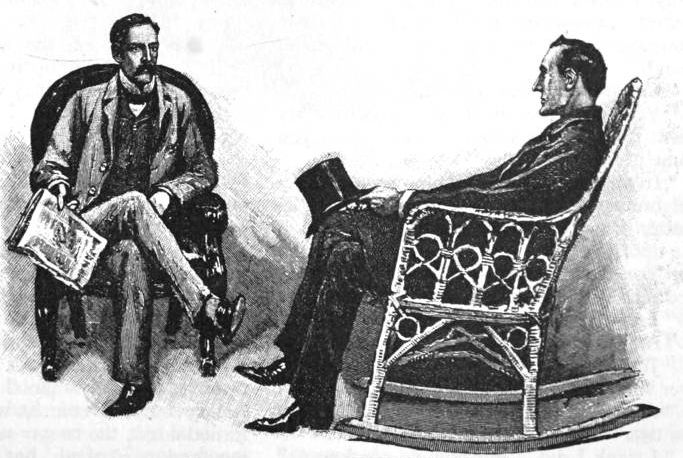
When not hot on the scent of a miscreant at large, the armchair detective staves off boredom by pretending to read their narrator’s mind. Congeniality, after all, is among their investigative toolkit. They never lose composure before their foes and partners in justice, because they never take their cases personally— their expeditions are merely a source of mental stimulation.
Classical detectives in the British mold of Dupin and Holmes explore the heights of human intellect without dire mortal consequence. However, this comes at the expense of treating their clients’ drudgeries as “commonplace existence”. They see society as a black-and-white chessboard with chaos pitted against peace, where order is restored once the case is closed. They become trapped in the private sitting-rooms that cement their archetype as a genre staple.
Thus in Poe’s detective stories, and eventually that of his successors Doyle and Christie, the primary goal of crime solving — which is the pursuit of justice— becomes a pastime rather than a source of human empowerment.

But as crime became the norm and peace an anomaly, the postwar era spelled the British detective’s decline. Modern scientific methods were no longer a source of amusement. Traumatized by chemical warfare, espionage, and genocide, readers needed society’s crime solvers to be more vindictive than intellectual— someone who was willing to put their fists to where their mouth is— to maintain the detective’s vocation for the “pursuit of justice”.
Noir fiction was born in crime fiction’s attempts to explore the blurring of ethics concerning this vocation. Logic alone, as the postwar era presented, was not enough to work alongside an often-corrupt police force. The American hardboiled detective thus gained prominence. Witty and vice-consumed with morally gray means of investigation, these anti-heroes were presented to wield formidable integrity to lead a compelling career in detection.
Filipino gumshoes
Much of Philippine crime fiction can be said to thrive on the hardboiled detective. A reader can sufficiently explore the violence and moral darkness that is the staple in Filipino noir. However in a social landscape of divisive populism, poverty, and spirituality, Filipino author and De La Salle University professor Isagani Cruz shares in a Publishing Perspectives article his observations on how hard it is for Filipinos to believe stories where crimes are solved, whether at the national or personal level.
Similarly, the nation’s culture of togetherness and fellowship— identified as the psychology concept of “kapwa” or “the self in the other”— renders it nearly impossible to craft a hardened, cynical champion of justice despite an endless cycle of violence.

There is more to Philippine crime fiction than the simple art of murder. Karina Bolasco, book curator at the 2025 Frankfurter Buchmesse asserts how the genre “is about victims and their families avenging them, or vigilantes seeking justice against perpetrators who usually are the police and military, or politicians and greedy elites with private armies.”
Sure enough, most Filipino-authored titles in the closer proximity to internationally-recognized detective fiction feature anything but an armchair sleuth. Dubbed as the first Filipino crime novel, Smaller and Smaller Circles by F.H. Batacan (University of the Philippines, 2002; Soho Press, 2015), is led by two Catholic priests—a forensic pathologist and his acolyte—investigating a series of brutal murders in a slum area. The novel explores the seeming impossibility of serial killers in the country, while touching on moral and political corruption within both Church and State.
That a conclusion to the case was achieved, perhaps, contributed to Smaller and Smaller Circles having an efficient adaptation to film two years later. But the American hardboiled detective is never blessed with such rest— thus readers are denied the satisfaction of seeing his efforts bear fruit. This is where budding Filipino authors in detective fiction have found their voice.
Filipino gumshoes and their guts
For our crusaders of justice, tackling one case at a time is a unique opportunity to witness some form of redemption for their corrupt society. But Philippine detective protagonists play neither judge, jury, nor executioner. Organizers of the 2025 Frankfurter Buchmesse, in which the Philippines is a Guest of Honor, recognizes in a Publishing Perspectives article how Philippine crime fiction “blends local color, customs, and the country’s socio-political context with traditional crime-fiction elements.”
Investigations around heinous crimes can feel like a moral court battle of unearthed evidence and hidden agendas. But because Filipino readers love a good melodrama, crime authors often turn their stories into a politicised soap opera.
Bolasco shares that “Much more than the thrill of the hunt or chase and solving a mystery, it is the moral quest that moves the narrative [of crime fiction]. Some stories end defeated by an endless cycle of oppression; others end triumphant and show how it is to survive in a warped world.” Indeed, while both classical and hardboiled detectives condemn the criminal, the Philippine detective will still see themselves as a fellow sinner. Their “kapwa.”

Ruth Clare G. Torres, a member of the Faculty of Arts and Letters at the University of Santo Tomas describes how a Filipino detective protagonist is less impassive and dispassionate than their Western counterparts. In an essay for the university’s journal for Creative Writing and Literary Studies, she writes how for detective protagonists, “expressing their emotions becomes beneficial to them as investigators.” Their stories “seems to seek some form of redemption within the system… that there are people who are committed to making a difference.” She observes how local fiction in the genre “shows that it is possible for crimes to be solved regardless of the victim’s financial status and political connection, because of the character of the detective.”
And for Smaller and Smaller Circles, it’s with the detectives’ position as Catholic priests that people more willingly give up information leading to the killer.
Filipino gumshoes… and their gods
Elements of popular religiosity, folklore, and theistic beliefs are often neutral concepts for the modern reader, but when fiction blends their promises of salvation with today’s moral turbulence, the resulting political message is more poignant and nuanced, yet just as powerful.
This is where Philippine detective fiction further deviates from the hardboiled mold. A well-written civilian sleuth needs more than instinct and intellect to catch the killer— and with fantasy, horror, and romance sharing the broadest readership in the country, this secret weapon is often divine intervention.
Divine activity is a key factor in the 2022 graphic novel Muros: Within Magical Walls, where a civilian investigator is hired to find a runaway daughter in an alternative city of Manila. In Paolo Chikiamco’s third graphic novel, Manila has just been freed from a tyrant-god’s rule, and is now an open city bustling with human and mythical societies— each with their own vendettas and even deadlier secrets.

Chikiamco’s protagonist, a half-human, half-metal “taga-sagot” (literally “person who answers”, also “informant” or “respondent”) , is the reader’s companion in exploring themes of racial discrimination, social repression, and human experimentation. Yet because an urban fantasy setting is political enough even without references to real-life events, Chikiamco deftly uses these themes for a compelling character introduction.
Muros’ Carlos Loyzaga, Taga-Sagot claims he is not a detective. He scrapes a career by maintaining delicate alliances with people in his city, and in part, this qualifies him as a Holmes–Dupin type of sleuth: one who can still behave gentlemanly despite suspicion and uncertainty. Loyzaga’s maneuvers to tip the scale in his investigations’ favor would also align him to the American hardboiled type.
His success as an investigator, however, is not solely because of a survivor’s gumshoe skill or gut instinct that would eventually birth a Westernized sleuth. Raised by the violent city after he lost his parents in entering it, Loyzaga uses his hard-earned loyalties from his different connections to stay ahead of Manila’s darkest forces. The result is a personal integrity just as formidable as the tyrants on every level of the city’s hierarchy, a compelling character study of the new decade’s Philippine detective, and a satisfying conclusion to the case that leaves readers wanting more.
Final thoughts
Crime is an innovative and unjustifiable act of moral transgression, and whether by occupation or reputation, a sleuth’s authority must remain unquestionable when diagnosing its symptoms in their community. Having a moral compass (or the semblance of one) in the investigation of crime leaves enough room for imagination how the detective protagonists’ integrity— and readers’ intelligence— can be tested, especially when the plot is pulled forward by slow-burn character arcs.
In the hands of discerning authors, detective fiction can be a source of human empowerment for troubled times of any scale. After all, there are more important questions to ask beyond “whodunnit”, “howdunnit”, and “whydunnit”.