The Choreography of Annihilation: Danse Macabre and the Seduction of Death in Literature
The medieval danse macabre is often understood as a moral allegory: a skeletal Death leading kings, maidens, priests, and peasants alike in a grim procession toward the grave, reminding viewers of mortality’s universality. Yet this interpretation, while accurate, is incomplete. The power of the danse macabre lies not merely in its didactic insistence on equality before death, but in its choreography. Death does not strike from afar; it extends a hand. It does not annihilate anonymously; it partners. The living do not simply perish; they enter into movement. Mortality becomes relational. The macabre is rendered intimate. What the danse macabre accomplishes is not merely theological instruction but aesthetic containment: it renders mortality intimate.
Yet medieval Europe also knew another, more disturbing dance. In outbreaks of choreomania, crowds convulsed in compulsive movement, sometimes to exhaustion or collapse. Here rhythm did not console; it overtook. The body moved without mastery. Where the danse macabre offered structure, choreomania suggested contagion. The transformation of death from rupture into encounter persisted long after medieval mural cycles faded. In nineteenth- and twentieth-century literature, the skeletal escort disappeared, but the grammar of the dance remained. Between these two figures, the ordered procession and the uncontrolled epidemic, lies a tension that literature has never resolved. From the ritualized consumption of fruit in Goblin Market, to the spiritual hush of Anne Brontë’s “Night,” to the diabolical autonomy of Lolly Willowes, and even to the rhythmic corporeality of modern lyricism, literature repeatedly reconfigures death as a figure of invitation. Death becomes seductive not because it is beautiful, but because it is staged as an exchange: a partner who offers rest, intensity, or liberation when life itself has grown unbearable.
In medieval visual culture, the erotic charge of the danse macabre emerged from proximity. Bone touches flesh. Death grasps wrists, clasps hands, pulls bodies into circular motion. Dance in the late medieval imagination was not neutral; it carried social and erotic connotations, particularly in courtly contexts where choreography governed proximity between genders. To represent death as a dance partner thus framed mortality as a form of enforced intimacy. The horror of decomposition was aestheticized through rhythm. Terror became bearable because it was structured.
This transformation of chaos into form was central. Death, as a brute biological fact, is rupture—abrupt, isolating, and unspeakable. But once staged as dance, it acquired temporality and reciprocity. Even if the dance is compulsory, it suggests participation. The macabre becomes a ritual in which the living are not simply extinguished but accompanied.
By the Victorian period, this ritual choreography migrated inward. The skeletal partner receded, replaced by seduction, appetite, and longing. In Rossetti’s Goblin Market, death did not appear as a skeleton but as a marketplace. The goblins’ repetitive cry, “Come buy,” functions like the refrain of a dance tune, incantatory and rhythmic. Laura’s approach is gradual, almost ceremonial. She listens, lingers, kneels, and consumes. The scene is structured as a transaction, yet its cadence resembles courtship; exchange replaces violence.
Crucially, Laura is not seized. She enters the circle. Like the noblewoman in a danse macabre mural who extends her hand to the skeletal escort, Laura participates in her own diminishment. The fruit she consumes is described in lush, excessive terms: swollen, dripping, intoxicating. Yet after indulgence comes wasting: pallor, silence, near-corpse stillness. Rossetti merges sensual excess with living death. Appetite becomes choreography; consumption becomes the dance step that leads toward annihilation.
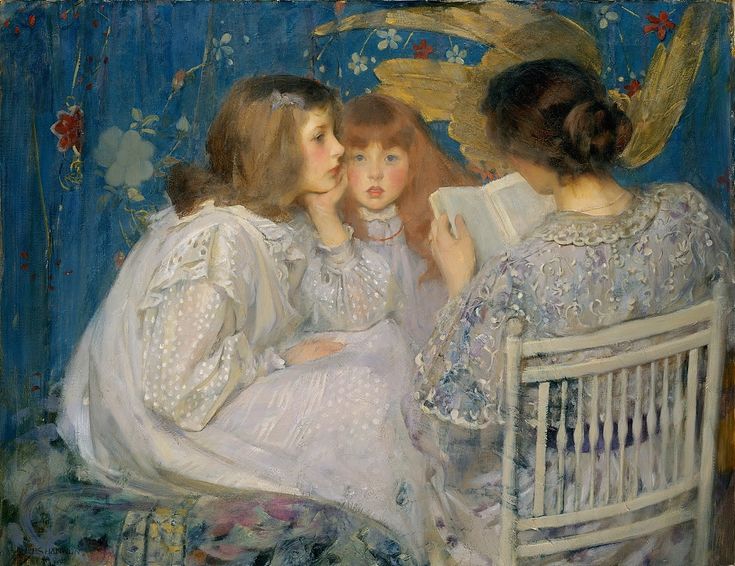
The goblin men themselves are grotesque hybrids, animalistic and uncanny, echoing the distorted forms of medieval Death. But Rossetti’s innovation lies in sweetness. Death seduces not through terror but through pleasure, becoming personified in the most harmless and innocent form of a small child. The fruit offers what ordinary life does not: intensity, forbidden sensation, a momentary transcendence of constraint. As in the medieval murals, social hierarchy dissolves. Laura abandons the boundaries of propriety and enters a ritual that levels distinctions between self and other, body and decay.
If Rossetti allowed infection to flicker beneath ornament, Edgar Allan Poe stripped away the illusion of containment. In The Masque of the Red Death, Prince Prospero attempts to choreograph mortality. He seals himself and his courtiers within an abbey and stages an elaborate masquerade while plague ravages beyond the walls. Movement unfolds through seven color-coded chambers; time is punctuated by a great clock. The party is meticulously structured. It is, in effect, a self-conscious danse macabre; art staging death at a safe aesthetic distance.
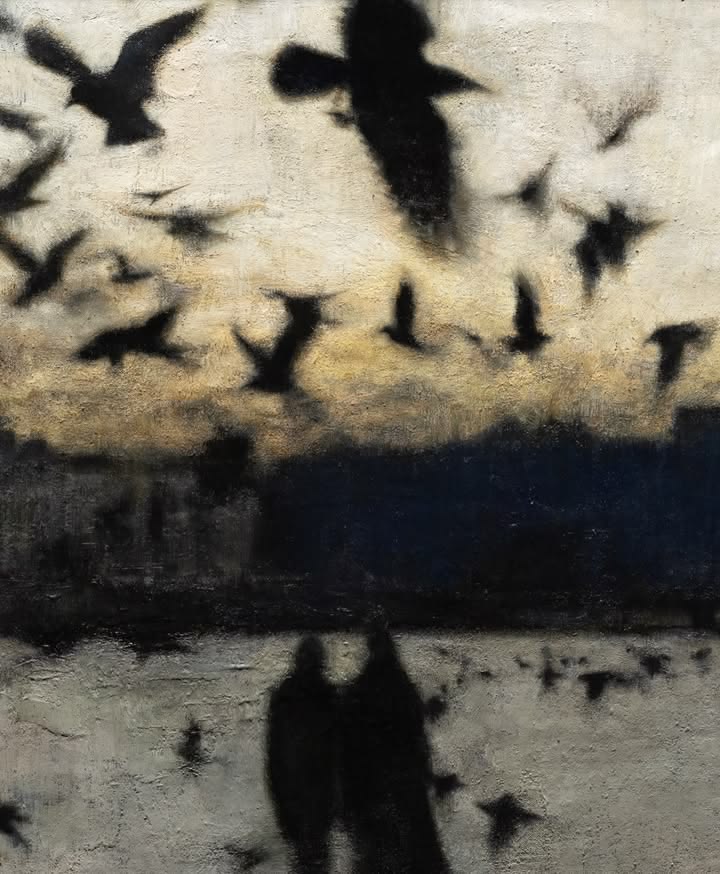
But the Red Death enters as a masked guest and moves from room to room. Prospero pursues. The progression resembles ritual procession, a dance across thresholds. When the figure is seized, there is no body beneath the costume–only contagion. Poe’s revelation is devastating: aesthetic form does not domesticate annihilation; it provides the conditions for its circulation. The masquerade collapses into an epidemic. Choreography becomes choreomania. The courtiers believed themselves partners in spectacle; they were already participants in plague. In Poe, the seduction of structure reveals its impotence. Death refuses to remain a dancer; it becomes the rhythm that overwhelms.
Where Poe dramatized the dance, Anne Brontë’s poem “Night” softened the choreography. Darkness in Brontë’s devotional poetics is not annihilation but shelter. Night enfolds, protects, quiets. Death becomes akin to sleep, not violent cessation but gentle transition. Here, the danse
macabre slowed to stillness. The skeletal escort transformed into a guide whose touch is barely perceptible.
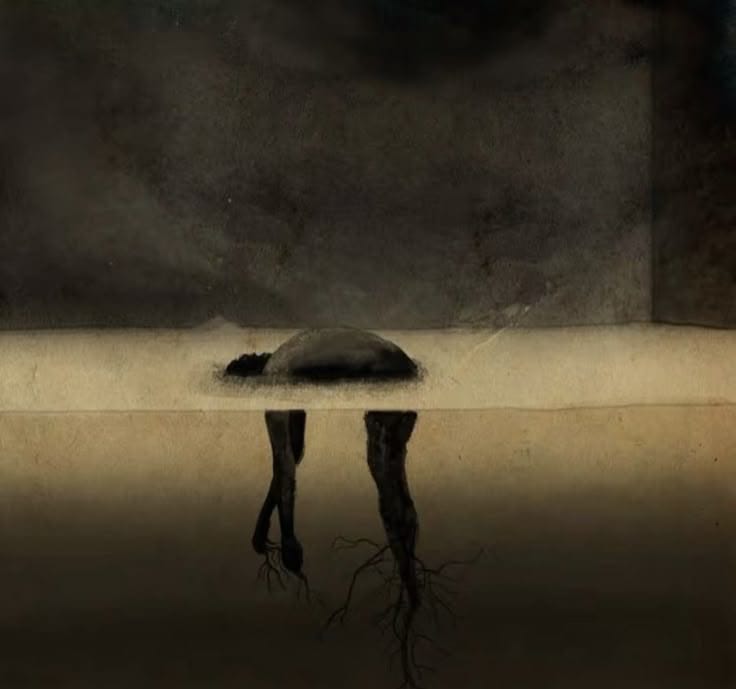
By the twentieth century, the dance acquired existential stakes. In Lolly Willowes, Laura Willowes seeks liberation from the suffocating roles prescribed by family and society. Her eventual alliance with the Devil culminates in Sabbath scenes that are explicitly circular, communal, rhythmic. The Devil is courteous, almost understated. His seduction is not sensational but ontological. He offers obscurity in the erasure of socially imposed identity. To enter the circle is to dissolve the self that others have constructed.
The Sabbath scenes echo the circular motion of danse macabre imagery: bodies gathered, moving, dissolving into rhythm. But unlike the medieval figures compelled by skeletal force, Laura chooses entry. Her dance is voluntary. What she seeks is not biological death but the death of social identity. To become a witch is to relinquish the prescribed self.
This transformation marked a crucial development in the trope. The seduction of death no longer concerned physical extinction alone, but erasure—the relinquishment of a self defined by others. Warner’s Devil becomes a partner in self-dissolution. The macabre dance leveled hierarchy not by dragging kings and peasants alike into the grave, but by allowing a woman to step outside the script of domestic subservience. Death here was freedom from visibility.
Contemporary lyricism intensified this dynamic by making rhythm bodily. In Florence + the Machine’s song “Witch Dance,” death is eroticized with corporeal immediacy: “Open my legs, lie down with death / We kiss, we sigh, we sweat / His blackberry mouth stains my nightgown / I pull him close / Wrap my legs around and it tastes like life.” Rhythm drives the body forward before reflection intervenes. Seduction collapses into surrender. The erotic encounter with mortality mirrors the compulsive logic of choreomania: we move toward annihilation before cognition, the body caught in pulse, breath, and desire. What medieval art depicted visually and Victorian poetry allegorized, modern music enacts sonically. Choreography and contagion are inseparable.
What unites these disparate works is not morbidity, but form. Death becomes seductive when it offers structure in the face of fragmentation. In the medieval mural, dance organizes inevitability. In Rossetti, appetite organizes longing. In Brontë, faith organizes fear. In Warner, ritual organizes rebellion. In modern music, rhythm organizes despair.
The seduction lies not in destruction itself, but in the transformation of destruction into exchange.
This distinction clarifies why death so often appears as lover, rival, or guide in literature. A lover offers intimacy, reciprocity, even agency. To frame death as a lover is to refuse its status as an
arbitrary catastrophe. It becomes something one meets, something one joins. The terror of rupture is replaced by the logic of encounter.
The medieval danse macabre thus persists not as iconography but as structure. Its choreography migrates from fresco to psyche, from public spectacle to interior desire. Where the skeleton once grasped wrists, appetite now beckons; where bone once clattered against flesh, rhythm now pulses through lyric.
To call death seductive is therefore not to glamorize annihilation. It is to recognize literature’s enduring need to render mortality relational. The dance neutralizes chaos by giving it form. The partner, whether goblin, night, devil, or death himself, makes romanticized extinction intelligible as movement rather than void.
What persists from the medieval murals to modern lyric is not merely the image of death dancing, but the attempt to negotiate inevitability through intimacy. The hand extended across centuries—skeletal, masked, sanctified, diabolical, sung—invites participation. Literature repeatedly stages that invitation, and in doing so, enacts it upon the reader.
In an age that often experiences fragmentation, alienation, and constraint, the allure of such choreography remains potent. Death promises equality, rest, intensity, or escape. It promises, above all, an end to isolation. To step into the dance is to be accompanied.
The skeletal hand extended across a medieval wall continues to reach through centuries of text. It no longer always appears as bone. Sometimes it is fruit; sometimes darkness; sometimes the courteous Devil in a clearing; sometimes a voice carried on percussion and breath. But its gesture is unchanged.
About the Author
Mishika Bhatia is an emerging researcher with experience in translational medicine, public health journalism, and pediatric and reproductive health. She is a current high school senior from Colorado, U.S.A., and interested in science, storytelling, and the ways culture shapes public understanding.