Could Gen Z be the next ‘Lost Generation’?
Are we lost or simply prevented from finding our way?
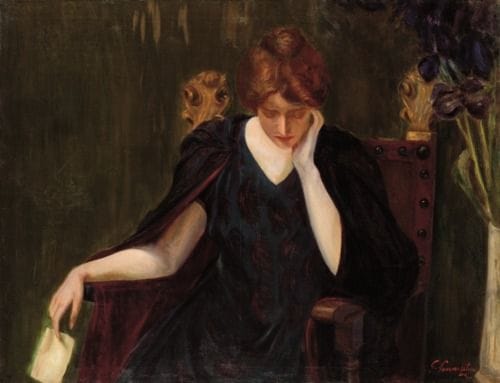
The ‘Lost Generation,’ the cohort that came of age during World War I and the 1918 flu pandemic were not literally lost. These young adults who had experienced quite a lot of trauma before their lives had even begun were disoriented, cynical, and stripped of their illusions. They saw the institutions that their parents trusted—the government, the church, the economic structure—as utter failures and as untrustworthy. These seemingly aimless wanderers can be seen and explored by Hemingway in The Sun Also Rises, or Gertrude Stein’s work—authors who were part of this generation themselves.
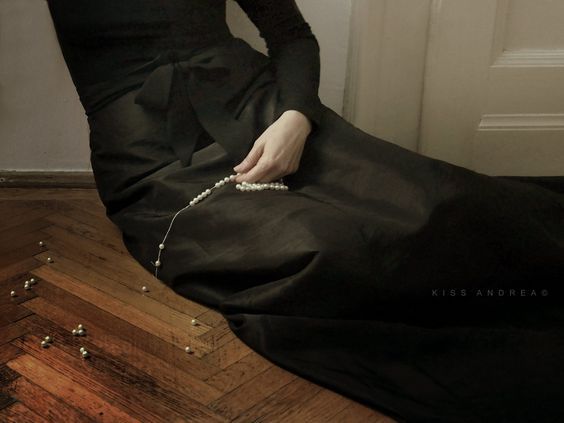
Interestingly enough, my generation—Gen Z—seems to mirror its 20th-century peers in many ways. We are a generation that has seen our lives heckled by the Covid-19 pandemic and disrupted by the major geopolitical events and wars that have plagued the 2020s. We are a disillusioned generation, one who is being asked to step into adulthood as the world seems to be crumbling beneath our feet. All while carrying the immense pressure of hope—hope that we may yet redeem and repair this broken world. A burden of mandated optimism. One could argue—as showcased in Hemingway’s The Sun Also Rises—that the ‘Lost Generation’ of the 1920s had the luxury of wandering aimlessly, while we on the other hand, are being handed the bill for a decaying planet. While they languished in Parisian cafés—reading, discussing, and retreating into their passive cynicism and a sort of glamorous, detached nihilism—we consume global catastrophe through a digital panopticon for breakfast, lunch, and dinner.
As we forge ourselves into perhaps the most self-aware generation in history, we become hyper-conscious of both our own suffering and the world’s. Thus living a claustrophobic existence, feeling trapped both inside of our minds and outside. Yet we must endure the constant, reductive bickering of our elders—‘Get off your phone!’ ‘Go outside!’—mistaking an existential and mental health crisis for a simple screen addiction. While I am not consumed by the digital world and engage in reading, writing, culture, etc most often, my traumatic childhood and my neurodivergent nature have held me back from leading a mentally healthy life. Instead of being met with empathy and compassion in the medical system, I have mostly faced an utter lack of those two qualities and brutality, in turn worsening my health—both physically and mentally. That is why I evoke the mental health crisis that my generation appears to be facing. We are more often than not told that it is our fault for feeling too deeply, being enamoured by our phones, and that we are dramatic and attention-seeking. The reason why Gen Z is isolating itself and struggling to make connections is not because we are obsessed with social media, it is because we are not being heard and we are not being helped.
Instead of experimenting with our youth, we are being told that we must conform to a societal ideal—both on the job market and in social advancements. Furthermore, we must now carry the responsibility of reversing climate change in a world where the people responsible for it hold the most power, yet it is nurtured by corruption and an utter lack of a moral compass. For those of us who are artists, who live and breathe only for our art, we are told that it is useless and that it is impossible to weave a career from it and earn a living. In addition, our art—whether it is writing, painting, creative design, singing, photography, acting, filmmaking, etc—is actively being robbed from us by the looming, parasitic threat of A.I.
I would not like to come across as someone who does not respect previous generations, because that is not the case. However, unlike our parents and our grandparents especially, we seem to no longer comply with somewhat outdated societal expectations of what a job or a family should look like. And we certainly do not comply with the idea that we should not speak about mental health and our struggles as young adults. We do not see our mental health as a symptom of our weakness but rather as a symptom of our uniqueness and strength. We speak up for our rights and for the rights of others, we advocate for ourselves and for those who are unable to do so, we speak up for the right to bodily autonomy and our agency, and we speak up for our opinions. We may seem passive but I believe that we are anything but.
There is such a beautiful dichotomy that lies within us. Most of us strive for change and progress, yet we are unsure of our own change and our own progress. We are unsure of our decisions and uncertain of the paths that we walk. A step forward and a step backward that exist in the same liminal space. A space that we occupy both fully and not at all. I believe that our generation can indeed make a difference, the same way others did before us. But I also believe that this change is urgent and must be imminent, for our generation, and for those to come. I am not sure if this is a brave declaration or a cry for help, nevertheless, I allow it to exist in my liminal space.
About the Author
Frances Carrel is an eighteen-year-old British-French writer born and raised in Paris. She is entering her third year of undergraduate studies in English Literature and History. Through her writing—whether it be poetry, prose, essays, or absurd fiction—she explores nature and her connection to it, her deep, cosmical emotions as a hypersensitive and autistic individual, anatomical feelings of estrangement, as well as the quiet tragedies of being alive. Her work is deeply intertwined with anatomy, sensations, and memory, thus excavating the deepest chasms and fissures of the heart. Previously, her work has been published in The Fig Tree Magazine.